 Cupie
Free tool
How to Say I Love You in Korean and 30 More Languages
Pick their language. Hear it, practice it, send it.
Quick answer
To say I love you in Korean, say 사랑해 (saranghae) to your partner, or 사랑해요 (saranghaeyo) when you want to be polite. In Tagalog it is Mahal kita, in Brazilian Portuguese Eu te amo, and in Portugal Amo-te. Pick any of 31 languages above to hear it aloud, get the right form for your gender and theirs, and learn I miss you, good night, see you soon, 3 pet names and a polite hello for their parents.
To say I love you in Korean, say 사랑해 (saranghae) to your partner, or 사랑해요 (saranghaeyo) to be polite. In Tagalog it is Mahal kita. In Brazilian Portuguese it is Eu te amo, and in Portugal Amo-te. The tool above has 31 languages, plays each phrase aloud, and gives you the right form for your gender and theirs. No sign-up, nothing to install.
How does it work?
- Pick their language. Tap a popular one or open All to search every language.
- Set the gender forms if the language needs them. Hebrew, Arabic, Hindi, Urdu, Thai, Vietnamese and a few pet names change with who speaks or who listens. The switch only shows up when it matters.
- Tap play. Hear it at normal speed, or tap the clock for slow. The voice comes from your own device, so it works offline once the page has loaded.
- Learn the rest of the kit: I love you too, I miss you, good night, see you soon, thank you, a polite hello for their parents and 3 pet names.
- Practice, then send it. The flashcards quiz you on all of it. Send it to them opens a card in their language that they can play aloud.
I love you in 31 languages
The sound-alike spellings are rough guides for English speakers. Tap play in the tool to hear the real thing.
| Language | I love you | Sounds like |
|---|---|---|
| Korean | 사랑해 (saranghae) | sah-rahng-heh |
| Tagalog (Filipino) | Mahal kita | mah-HAHL kee-TAH |
| Portuguese (Brazil) | Eu te amo | AY-oo chee AH-moo |
| Portuguese (Portugal) | Amo-te | AH-moo-teh |
| Spanish | Te amo | teh AH-moh |
| Japanese | 大好き (daisuki) | eye-shee-teh-roo |
| French | Je t'aime | zhuh TEM |
| German | Ich liebe dich | ikh LEE-buh dikh |
| Italian | Ti amo | tee AH-moh |
| Chinese (Mandarin) | 我爱你 (wǒ ài nǐ) | waw eye nee |
| Vietnamese | Anh yêu em (man speaking), Em yêu anh (woman speaking) | ahn ee-oo em (man), em ee-oo ahn (woman) |
| Hindi | मैं तुमसे प्यार करता हूँ (man speaking), मैं तुमसे प्यार करती हूँ (woman speaking) main tumse pyaar karta hoon, main tumse pyaar karti hoon | main TUM-seh pyaar KAR-taa hoon (man), main TUM-seh pyaar KAR-tee hoon (woman) |
| Arabic | أُحِبُّكَ (to him), أُحِبُّكِ (to her) uhibbuka, uhibbuki | oo-HIB-boo-ka (to him), oo-HIB-boo-kee (to her) |
| Hebrew | אני אוהב אותך (man speaking), אני אוהבת אותך (woman speaking) ani ohev otach / otcha, ani ohevet otach / otcha | ah-NEE oh-HEV oh-TAKH (man to woman) |
| Russian | Я тебя люблю (ya tebya lyublyu) | yah teb-YAH lyoob-LYOO |
| Ukrainian | Я тебе кохаю (ya tebe kokhayu) | yah TEH-beh ko-KHA-yoo |
| Polish | Kocham cię | KOH-hahm chyeh |
| Dutch | Ik hou van jou | ik how fahn YOW |
| Turkish | Seni seviyorum | seh-NEE seh-VEE-yoh-room |
| Indonesian | Aku cinta kamu | AH-koo CHIN-tah KAH-moo |
| Thai | ผมรักคุณ (man speaking), ฉันรักคุณ (woman speaking) phom rak khun, chan rak khun | pom rak koon (man), chahn rak koon (woman) |
| Greek | Σ’ αγαπώ (s'agapo) | sah-gah-POH |
| Swedish | Jag älskar dig | yah EL-skar day |
| Norwegian | Jeg elsker deg | yai EL-skar dai |
| Danish | Jeg elsker dig | yai EL-skuh dai |
| Romanian | Te iubesc | teh yoo-BESK |
| Hungarian | Szeretlek | SEH-ret-lek |
| Czech | Miluji tě | MIH-loo-yee tyeh |
| Persian (Farsi) | دوستت دارم (dooset daram) | doo-SET dah-RAM |
| Urdu | میں تم سے محبت کرتا ہوں (man speaking), میں تم سے محبت کرتی ہوں (woman speaking) main tum se mohabbat karta hoon, main tum se mohabbat karti hoon | main TUM seh mo-HAB-bat KAR-taa hoon (man), main TUM seh mo-HAB-bat KAR-tee hoon (woman) |
| Swahili | Nakupenda | nah-koo-PEN-dah |
How do you say I love you in Korean?
Korean drops the words for I and you, so the whole phrase is one verb: 사랑하다 (saranghada), to love. How you end it sets the politeness.
- 사랑해 (saranghae): casual. This is the one couples say to each other.
- 사랑해요 (saranghaeyo): polite. Safe with anyone, and sweet in a text.
- 사랑합니다 (saranghamnida): formal. You hear it in speeches and on stage, rarely between partners.
To say it back, use 나도 사랑해 (nado saranghae), I love you too. For I miss you, Koreans say 보고 싶어 (bogo sipeo), which literally means I want to see you.
How do you say I love you in Tagalog and Portuguese?
In Tagalog, say Mahal kita, and Mahal din kita to say it back. Many Filipino couples mix in English, so Miss na kita is the everyday I miss you. With their parents, add po and greet them with mano, touching the back of their hand to your forehead.
In Portuguese, Brazil and Portugal differ. Brazilians say Eu te amo; in Portugal it is Amo-te. Both use the famous word saudade for missing someone: Estou com saudade de você in Brazil, Tenho saudades tuas in Portugal.
Which languages change with gender?
Most lists online give one phrase per language. In some languages that phrase is only right for half of couples.
- Hebrew: the verb follows your gender and the word for you follows theirs. A man says ani ohev otach to a woman; a woman says ani ohevet otcha to a man.
- Arabic: uhibbuka to a man, uhibbuki to a woman.
- Hindi and Urdu: the verb follows the speaker: karta if you are a man, karti if you are a woman.
- Thai: men say phom and end polite sentences with khrap; women say chan and end with kha.
- Vietnamese: anh is the man or older partner, em the woman or younger one.
Set I am and Saying it to in the tool, and every phrase, pet name and pronunciation hint updates to match.
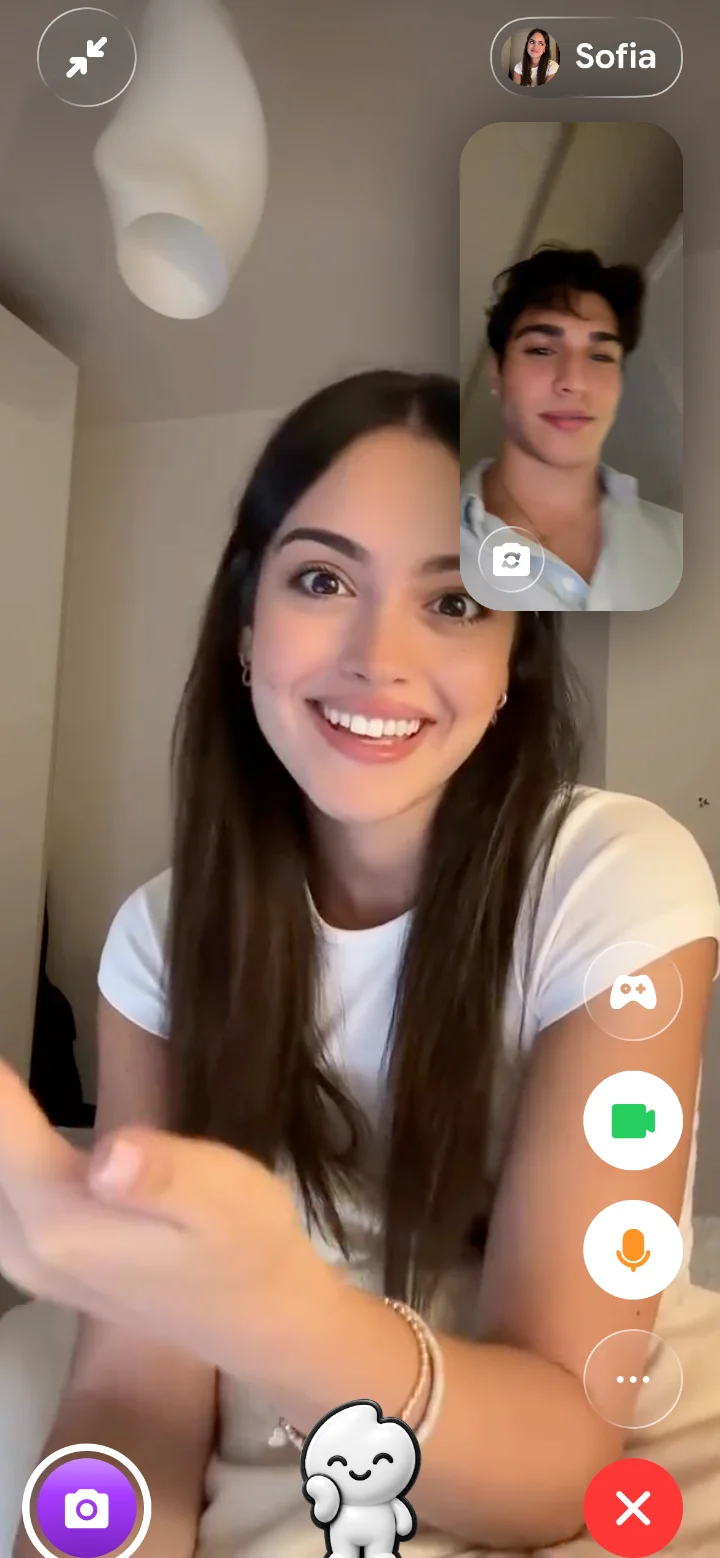
How do you handle a language barrier in a long distance relationship?
- Learn what they will hear most. Good night, I miss you and their pet name matter more on a nightly call than grammar drills.
- Practice one phrase per call and ask them to correct you. Our video call ideas and questions to ask your partner give you something to say next.
- Prepare for their family. Each language has a polite hello for their parents and a short tip on greetings. Save it and practice the week before the visit. Counting down? Try the countdown until I see you.
- Keep the effort small and regular. Our long distance tips explain why little daily habits beat rare big gestures, and our long distance date ideas turn practice into a date.

What are the limits?
- We wrote and double-checked every phrase against dictionaries and native-speaker learning sources, but slang and regional use vary. Ask your partner how their family says it, and tell us on the feedback page if something is off.
- Arabic is shown in Modern Standard Arabic. Everyday speech uses dialects that differ by country.
- Playback uses your device voices. Some phones have no voice for every language; the romanization is always there.
- The link you send holds the phrase and your name inside the link itself. Nothing is stored on a server, and anyone with the link can see it.
FAQ
How do you say I love you in Korean to your boyfriend or girlfriend?
Say 사랑해 (saranghae). It is the casual form couples use with each other. Add -요 to make it polite: 사랑해요 (saranghaeyo). The most formal version, 사랑합니다 (saranghamnida), is for speeches and announcements, not for a partner.
How do you say I love you in Tagalog?
Mahal kita. To say it back, use Mahal din kita (I love you too). Mahal also means expensive, which is a common joke among Filipino couples. When you speak to their parents, add po to sound respectful.
Is it Eu te amo or Amo-te in Portuguese?
Both are correct. Brazilians say Eu te amo. In Portugal the pronoun goes after the verb, so people say Amo-te or Eu amo-te. Pick the Brazil or Portugal version in the tool to hear the difference.
Which languages change I love you depending on gender?
In Hebrew, the verb follows your gender and the word for you follows theirs, so there are four forms. Arabic changes with who you say it to, Hindi, Urdu and Thai change with who is speaking, and Vietnamese picks anh or em by gender or age. Set I am and Saying it to in the tool and every phrase updates.
Why does the audio sound robotic or not play?
The tool uses the voices built into your phone or computer, so nothing is downloaded or sent anywhere. If your device has no voice for a language, add one in your speech settings, or read the romanization under each phrase.
How do we deal with a language barrier in a long distance relationship?
Learn a few phrases that matter to them, not a whole course at once. Practice one on every call, ask them to correct you, and save the ones you want to use with their family. Small, regular effort shows care, and calls are where it sticks.
How we made this page: page text and tool drafted with help from AI tools, then reviewed and edited by Niclas Illg against the sources below on November 3, 2026. The tool itself runs in your browser, with no AI generator behind it. Cupie is our own app.